The places where high-voltage power gets stepped down for delivery.
A substation is where transmission lines feed in, and the voltage gets stepped down so it can be sent to homes, businesses, and facilities. We build new substations from a bare site to a turned-on system, upgrade existing ones, and handle all the protection and control work that keeps everything safe. Every piece is done by our own people — no handoffs at the most critical moment.
- Voltage
- 12.47 to 500 kV
- Type
- Open-air · Gas-insulated · Mobile
- Our scope
- Foundations · Steel · Controls
- Build rate
- 9 substations per year
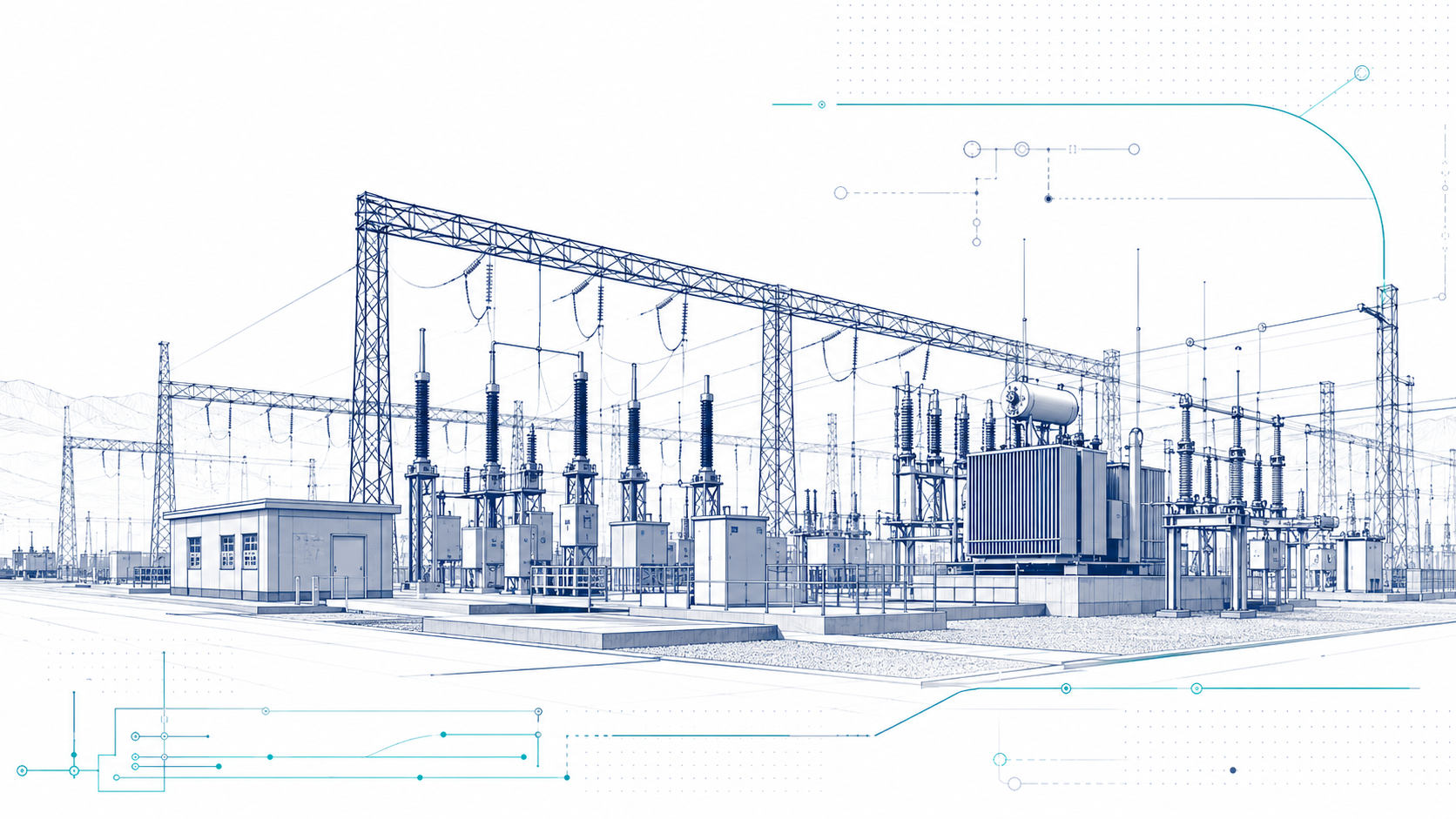
Substations, start to finish.
- A
New substations
From siting through the day the substation goes live, we handle every step. Civil work, steel, the control building, the relays that protect equipment — all by our own crews.
- B
Upgrades to existing substations
Adding new equipment to a substation that has to keep running is delicate work. We plan outages carefully and coordinate with the utility’s control room so customers see the smallest possible interruption.
- C
Protection and control systems
The relays and controls that protect a substation are the most important — and most often subcontracted — part of the job. We keep this work in-house with our team of 24 engineers and technicians.
- D
Mobile substations
A mobile substation is a complete substation on wheels. We deploy them for emergencies, planned outages, and bridge power. Our parent company also handles backup generation when needed.
How a project runs, step by step.
- 01
Site work and foundations
Clearing, grading, drainage, and oil containment (which catches any leaks from transformers). Then we drill or pour the foundations that will support every piece of equipment.
- 02
Steel and grounding
Setting the steel structures that support the wires and equipment, installing the lightning protection system, and burying the ground grid that keeps everyone safe during a fault.
- 03
Equipment installation
Receiving and assembling transformers, placing circuit breakers and switches, and setting the control building.
- 04
Control wiring
Pulling and connecting all the cables that link equipment to the relays and controls. Connecting to the utility’s remote control system.
- 05
Testing
Factory testing at the manufacturer, then on-site testing once everything is connected. We document everything for the operator who will run the substation for the next 30 years.
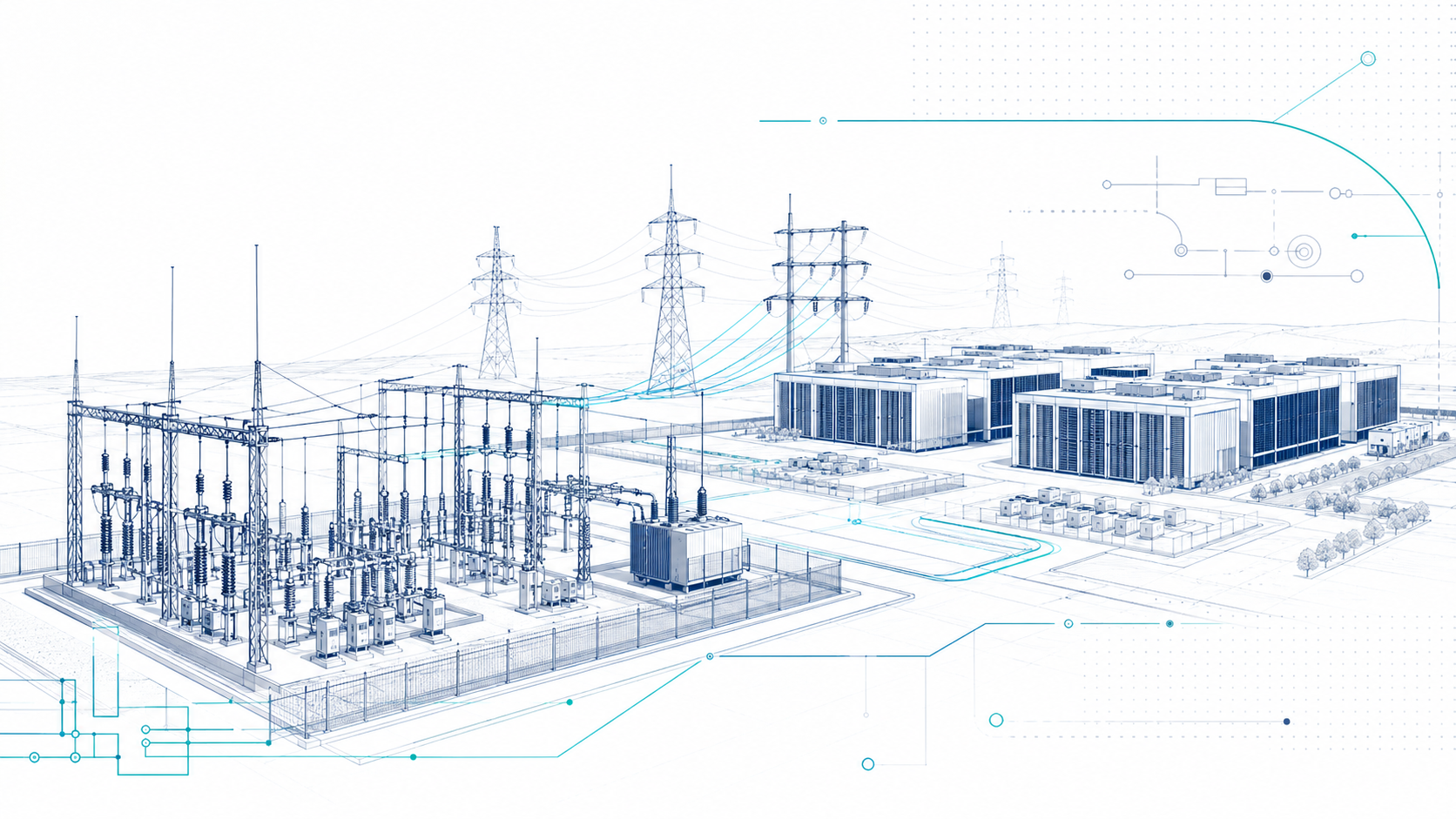
Real projects we have built.
Common questions.
Related areas of our work.
Transmission
New construction, rebuilds, and upgrades on transmission lines from 69 kV to 500 kV. When an outage is not an option, our crews has knowledge and expertise in live-line / barehand construction and maintenance.
Read moreAI & Data Center Power
Substations, redundant power feeds, and the medium-voltage distribution that powers data center campuses. From 100 MW to 1,200 MW, with phased turn-on for early load.
Read moreBattery Storage
Standalone and co-located battery systems from 10 MW to 400 MW. We build the batteries, the substation that connects them to the grid, and handle all the testing.
Read moreHave a substation project to plan?
We respond within two business days. For emergency, federal, and large industrial work, within four hours.